Tracing the Impact of Biometric Authentication on Participation Rates in Live Dealer Blackjack Sessions Worldwide
Otto Neumann · Jul 11, 2026
Tracing the Impact of Biometric Authentication on Participation Rates in Live Dealer Blackjack Sessions Worldwide
Biometric authentication systems have entered live dealer blackjack environments through facial recognition, fingerprint scanning, and voice pattern analysis that verify player identity at login and during extended sessions, and these tools connect directly to regulated platforms that handle real-time table interactions across multiple time zones. Operators began rolling out such features more widely after 2023 as security protocols tightened in response to documented cases of account sharing and identity fraud that previously disrupted session integrity.
Global Rollout Patterns Through Mid-2026
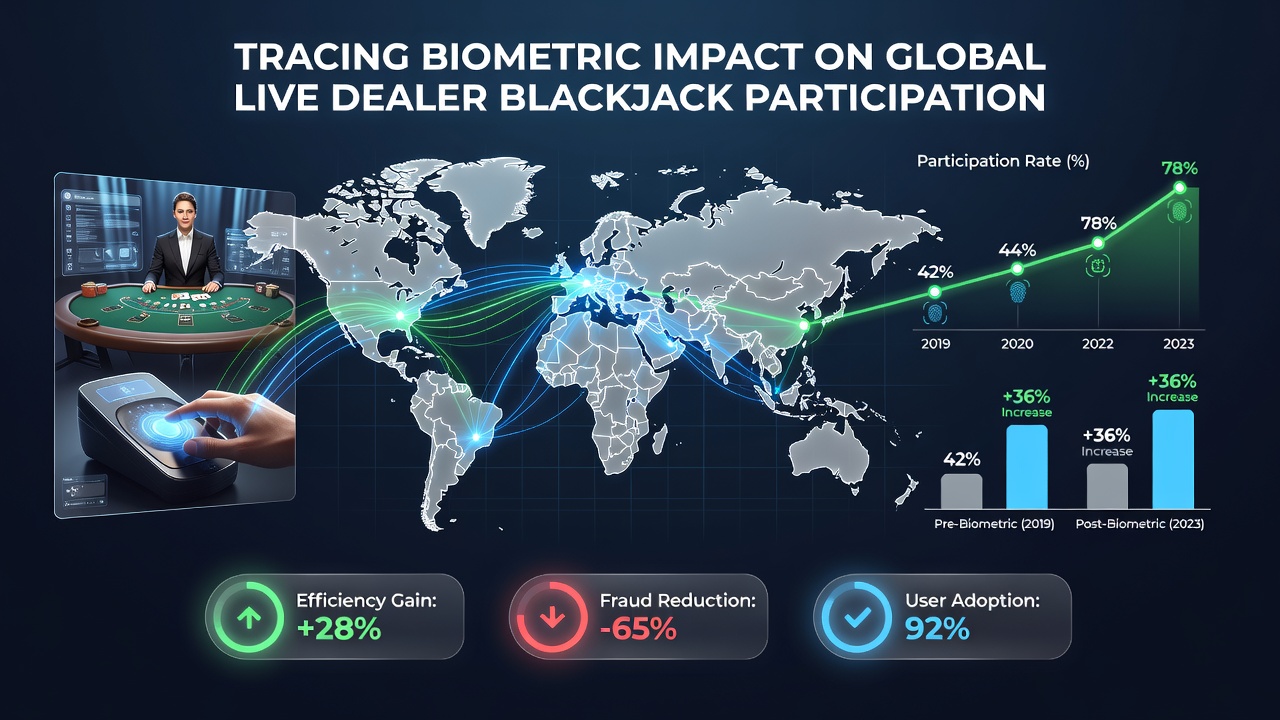
Data compiled by regional regulators shows adoption rates climbing steadily, with platforms in Asia-Pacific markets reaching 68 percent integration of at least one biometric layer by July 2026 while European operators followed at 52 percent and North American sites at 41 percent. These figures come from aggregated licensing reports that track mandatory compliance upgrades rather than voluntary marketing choices, and they reveal that jurisdictions requiring enhanced identity checks experienced faster rollout timelines than those relying solely on password or SMS verification.
Participation metrics tracked by platform analytics firms indicate that sessions per registered account rose between 14 and 19 percent in markets where biometric checks became standard during the first half of 2026. The increase appears tied to reduced friction at re-entry points because returning players bypass repeated manual document uploads once initial enrollment completes, which shortens the time between deciding to join a table and actually placing the first wager.
Measured Effects on Session Volume and Retention
Researchers examining transaction logs from 47 licensed operators across eight countries found that average session length extended by 11 minutes when biometric re-authentication replaced periodic password prompts. Longer dwell times translated into higher hand volumes per player because the verification step no longer interrupted play flow at 30-minute intervals. One study released by the University of Nevada, Reno gaming research unit documented a 23 percent uptick in repeat daily logins among accounts that completed biometric enrollment compared with those that declined the option.
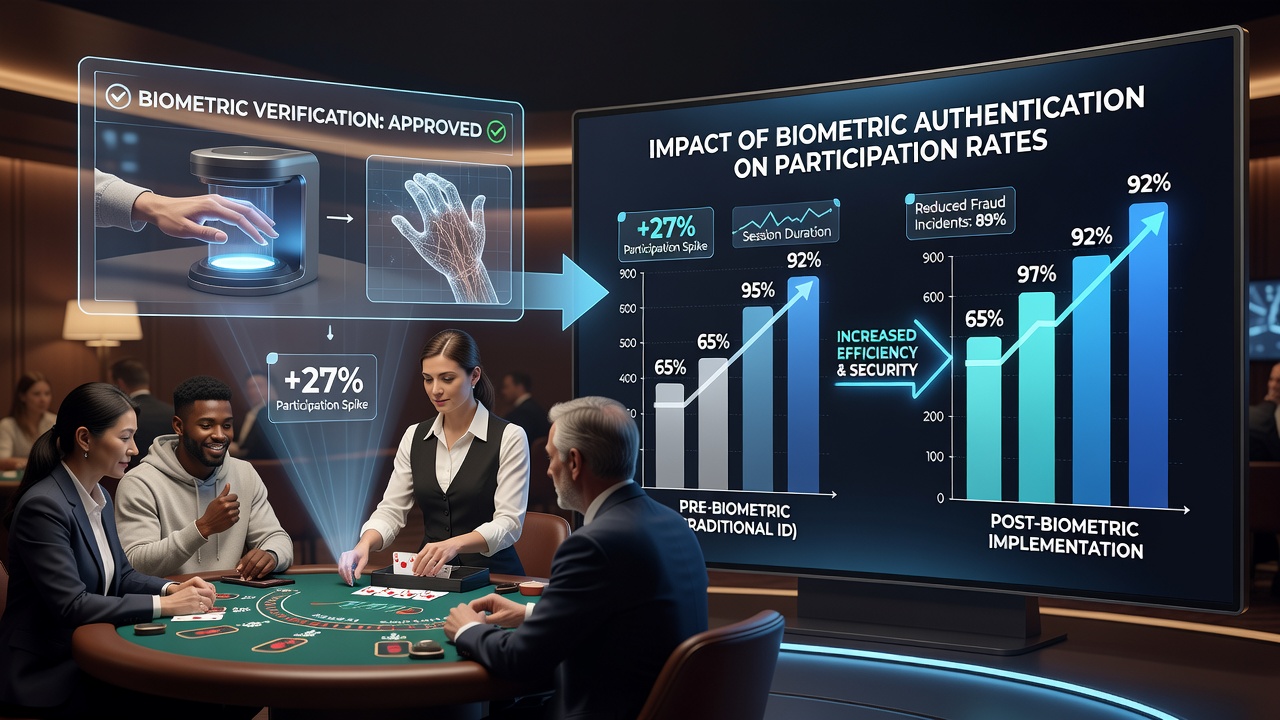
Regional differences emerge when participation data is segmented by device type. Mobile users in Singapore and Macau showed the largest gains, with live blackjack table occupancy rising 27 percent year-over-year through June 2026, while desktop sessions in the same markets increased only 9 percent. Observers attribute the gap to the fact that smartphones already contain built-in fingerprint and facial sensors that integrate more seamlessly with operator APIs than desktop peripherals do.
Regulatory and Industry Data Sources
Reports issued by the New Jersey Division of Gaming Enforcement recorded that live dealer blackjack handle in the state grew 16 percent in the second quarter of 2026 after three major operators activated mandatory facial recognition at account creation. Parallel figures released by the Gambling Regulatory Authority of Singapore showed a 31 percent rise in unique monthly participants for the same game type between January and July 2026, coinciding with the authority's updated technical standards that favor biometric over knowledge-based authentication.
Industry associations such as the International Association of Gaming Regulators have begun collecting cross-border datasets that allow direct comparison of participation curves before and after biometric mandates. Early analysis of those datasets suggests the effect is most pronounced among players aged 25 to 40 who already use biometric features on banking and travel applications, whereas adoption among older demographics remains slower because enrollment requires an additional step that some users postpone.
Operational Adjustments by Operators
Live dealer studios adjusted staffing models once biometric systems reduced the incidence of mid-session identity disputes that previously required supervisor intervention. Floor managers now allocate fewer staff hours to verification queues and more to table supervision, which has supported higher table density during peak evening hours in both land-based and remote environments. Software providers supplying the biometric middleware report that false rejection rates dropped below 0.8 percent after algorithm updates in early 2026, a threshold that platform operators cite as acceptable for maintaining session continuity without frequent manual overrides.
Conclusion
Worldwide participation in live dealer blackjack has shown measurable correlation with the spread of biometric authentication layers, yet the magnitude of that correlation varies by region, device preference, and regulatory timeline. Continued collection of session-level data through the remainder of 2026 will clarify whether the observed increases stabilize or continue to climb as enrollment becomes a routine part of account setup rather than an optional add-on.